Joint Account or Separate? Your Decision

Reading time: 8 minutes
Last week I sat across from Sophie, 34, a project manager from Denver. She and her partner both earn well and have been paying their shared rent from their own separate accounts for two years. Now they're about to buy a house, and suddenly the question comes up: a joint account in the relationship, or stay separate? Sophie seemed tense. "I'm afraid of losing control," she said. I hear this worry often in my coaching sessions.
The decision for or against a joint account isn't a purely practical one. It touches on emotional topics like trust, autonomy and financial security. According to a 2023 GfK study, 42 percent of couples in Germany keep a joint household account, while 31 percent prefer completely separate accounts. The remaining 27 percent use a hybrid model. What does that mean for you and your partnership?
The classic joint account: everything in one pot
In the classic model, both partners deposit their entire income into a joint account. All expenses run through it: rent, groceries, insurance, but also personal purchases like clothes or hobbies. This model works especially well when both have a similar relationship with money and earn similar amounts.
Amy and Michael from Columbus have had this model since their wedding in 2019. Both work full time, Amy as a teacher, Michael as a software developer. He earns about $2,000 more per month, but that doesn't matter to the two of them. "We see ourselves as a team," Amy told me. "What one of us earns belongs to both of us." This attitude reduces conflict, but it requires that neither of you secretly spends large amounts.
According to a 2024 Deutsche Bank survey, 68 percent of couples with fully shared finances say they argue less about money than before merging their accounts. However, 41 percent also report a feeling of lost autonomy, especially when one earns significantly less.
Separate accounts in a partnership: full independence
The opposite is complete separation. Each person keeps their own account, and shared costs are split by invoice. Many couples use apps like Splitwise or Tricount to track exactly who paid what. At the end of the month, you settle up.
Lisa, a friend from Brooklyn, has lived with her partner for six years. Both are self-employed, and both earn irregularly. "We split the rent fifty-fifty, and we take turns paying for groceries. Restaurant? Everyone pays their own bill," she explains. That sounds sober, but it works perfectly for the two of them. According to Statista, in Austria in 2023 about 28 percent of unmarried couples paid their shared expenses completely separately.
The big advantage: you keep full control over your money. Nobody asks why you spent $130 on a new pair of shoes. The downside: it can get petty. Who pays for the toilet paper? Does the wine count as part of the shared grocery run or is it a luxury? These small discussions can get annoying over time.
The three-account system: the golden middle path
More and more couples are choosing a hybrid model known in financial circles as the three-account system. Both partners keep their own account and additionally open a joint household account. Each pays a fixed amount or a percentage of their income into this account every month.
Jenna and Steve from Portland have used this system since 2021. Jenna earns about $2,600 net a month as a graphic designer, Steve earns $3,500 as a physical therapist. They agreed that each transfers 40 percent of their net income to the joint account. That comes to $1,040 for Jenna and $1,400 for Steve. Together that's $2,440 a month for rent, electricity, internet, groceries and shared leisure activities. The rest stays in their private accounts.
"I can treat myself to a spa weekend without Steve feeling like he has to have a say," says Jenna. According to a 2023 survey by the German Institute for Economic Research, 74 percent of couples with a three-account system report high satisfaction with their financial arrangement. That's the highest figure of all account models.
How can couples best organize their finances?

The answer depends on several factors. First: do you earn similar amounts, or is there a big income gap? With similar incomes, the fifty-fifty model works well. With differences of more than 30 percent, I recommend a proportional split based on income, so nobody feels financially overstretched.
Second factor: how transparent do you want to be? Some couples value having their partner see every expense. Others appreciate privacy. There's no right or wrong, but you need to talk about it honestly.
Third factor: are you married, or do you plan to have kids? After marriage, marital property regulations automatically apply in Austria and Germany. In the event of a divorce, assets are divided anyway, regardless of which account they're in. With children and one partner on parental leave, a joint account or the three-account system becomes more important in order to ensure financial security.
Concrete steps toward a decision
- Sit down together on an evening without distractions. No phone, no TV. Take at least an hour.
- Take stock: how much does each of you earn net? What fixed costs do you share? List every item, from the rent to the Netflix subscription.
- Discuss your values: is transparency more important, or autonomy? What does financial fairness mean to you?
- Try one model for three months. Then evaluate honestly: does it feel good? Are there friction points?
- Adjust if necessary. No model is set in stone.
Managing a joint account: practical tips
If you decide on a joint account, choose a bank with a good online banking app and low fees. In Austria, for example, Bank Austria or Erste Bank offer free joint accounts if a minimum monthly deposit is met. In Germany, DKB or ING are good options.
Set clear rules: above what amount does the other person need to be informed? Many couples agree on a limit of $200 or $300. Anything above that gets discussed. This prevents nasty surprises and builds trust.
Plan regular money talks. Once a month, always on the same day, for example the first Sunday. Go through the account statements together, discuss larger planned expenses, check your savings goals. That sounds unsexy, but it's the foundation for a partnership without money worries.
Which account model fits my partnership?
Honestly: you have to figure that out yourself. What works for Sophie and her partner doesn't necessarily suit Amy and Michael. I advise you to listen to your gut feeling. If the idea of a joint account makes you uncomfortable, that's a signal. Maybe unresolved money blocks are behind it, which you should take a closer look at.
At the same time, it's important not to stay completely separate out of fear. Financial intimacy can deepen a relationship. The three-account system often offers the best compromise here: enough togetherness for the sense of "we," enough independence for personal freedom.
What does the research say?
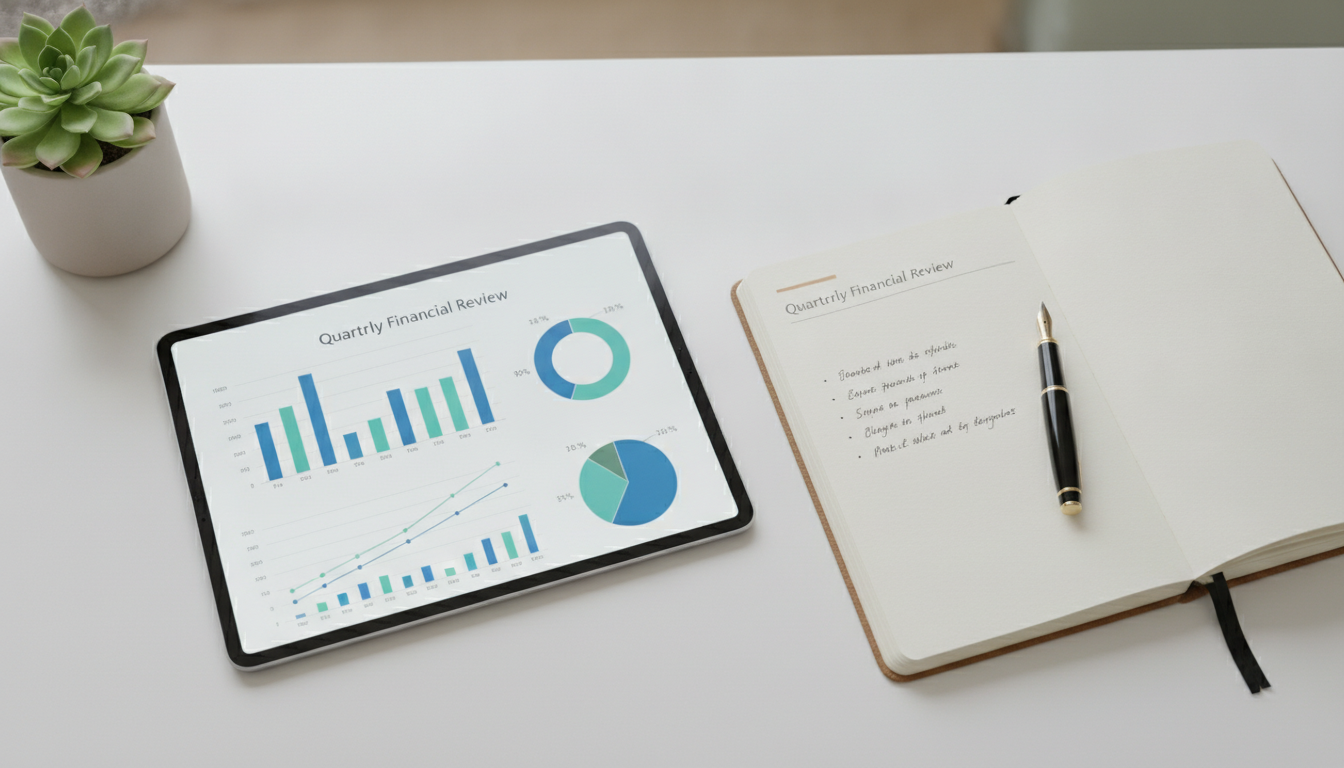
A 2022 long-term study from Cornell University followed over 3,000 couples for five years. The result: couples with fully shared finances reported higher relationship satisfaction than couples with completely separate accounts. The difference averaged 11 percentage points on a standardized satisfaction scale. Source: Cornell University News, March 2022.
Interestingly, couples with hybrid models showed similarly high scores to those with fully joint accounts. The deciding factor wasn't the model itself, but the quality of communication about money. Couples who talked about finances at least once a month had significantly fewer conflicts.
Frequently asked questions
Joint account in a relationship, yes or no?
There's no blanket answer. A joint account promotes transparency and can strengthen the sense of "we." It's especially suitable for couples with similar incomes and shared financial goals. If you have very different spending habits or one of you values financial independence, separate accounts or the three-account system may fit better. What matters is that both partners feel comfortable with the decision.
Separate or joint account: pros and cons?
Joint account: the advantage is easy management of shared costs and high transparency. The downside is the potential loss of autonomy and possible conflicts over different spending habits. Separate accounts: the advantage is full financial independence and clear responsibilities. The downside is the effort of splitting shared costs and less financial intimacy. The three-account system combines both advantages but requires a bit more organizational effort.
How exactly does the three-account system work for couples?
Both partners keep their personal checking account and additionally open a joint household account. Every month, each transfers an agreed amount to the joint account. That can be a fixed amount or a percentage of each person's income. All shared fixed costs such as rent, electricity, groceries and shared leisure activities are paid from this joint account. The rest of the money stays in the personal accounts for free use.
What happens to the joint account in a breakup?
With a joint account, both partners have equal access and authority to make transactions. In the event of a breakup, the account should be closed as quickly as possible and the balance divided. Legally, married couples in Austria and Germany fall under the community of accrued gains unless agreed otherwise. That means assets are divided regardless of the account model. For unmarried couples, I recommend making a written agreement when opening the account about how to proceed in the event of a breakup.
Should we open a joint account before the wedding?
That's a personal decision. Many couples start with the three-account system as soon as they live together, so before the wedding. The joint household account makes it easier to manage shared costs like rent and groceries. Legally, the wedding makes no difference to the account model, but marriage does change your marital property status. I recommend talking openly about finances even before the wedding and testing a model that works for both of you.
My conclusion: money is communication
After hundreds of coaching conversations about couples and finances, I'm convinced: the account model matters less than the way you talk about it. Sophie, the project manager from the beginning, by the way, decided with her partner on the three-account system. They each transfer 50 percent of their net income to the joint account because they're currently saving for the house. The rest stays private. She feels secure and connected at the same time.
Whether it's a joint account in the relationship, completely separate, or a hybrid model: make a conscious decision. Talk openly about your fears and wishes. And above all: stay flexible. What fits today may be outdated in three years because of changed life circumstances. Financial arrangements aren't a rigid framework but a living part of your partnership.
If you need support with this or notice that old beliefs about money are blocking you, feel free to get in touch. Together we'll find out which model really fits you.